
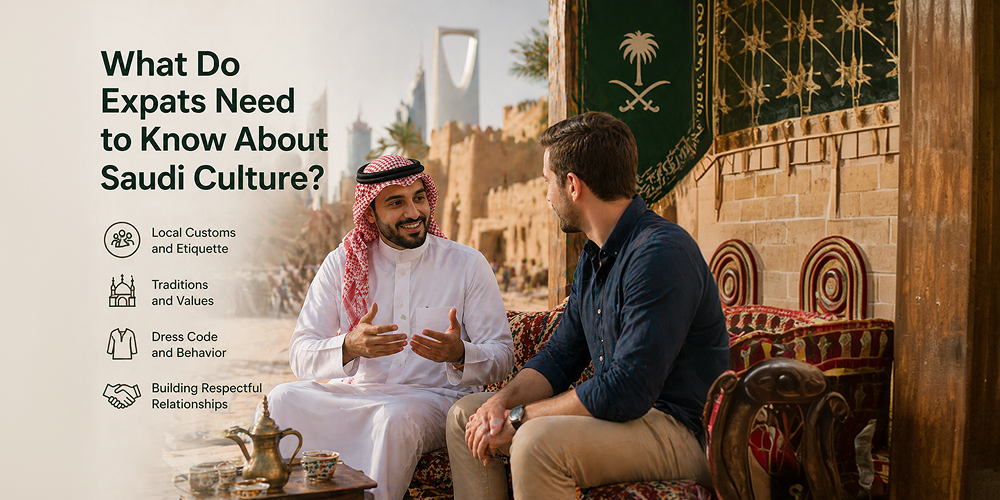
Moving to a new country is never just about logistics—it’s about understanding people, values, and unspoken rules. When it comes to saudi culture, expats often find themselves navigating a world that is deeply rooted in tradition, yet rapidly evolving in modern ways.
If you’re planning on living in saudi arabia, or already there, understanding the social fabric will help you avoid awkward situations, build meaningful relationships, and truly feel at home.
This guide offers a comprehensive, practical, and engaging breakdown of what expats need to know about saudi culture, covering everything from greetings and hospitality to workplace etiquette and dress codes.
Understanding Saudi Hospitality and Greetings
One of the most defining aspects of saudi culture is hospitality. It is not just a social norm—it is a deeply ingrained value tied to honor, generosity, and respect.
The Meaning Behind Saudi Hospitality
In saudi traditions, welcoming guests is considered a duty and a privilege. Whether you are visiting a colleague’s home or attending a casual gathering, you will likely be greeted with:
- Arabic coffee (Gahwa)
- Dates
- Warm, repeated invitations to eat
Refusing this kind of hospitality directly may be considered impolite, so it’s better to accept—even if just a little.
Common Greetings in Saudi Arabia
Understanding greetings is essential if you want to navigate saudi etiquette confidently.
Verbal Greetings
- “As-salamu alaykum” (Peace be upon you)
- Response: “Wa alaykum as-salam”
These greetings are used in both formal and informal settings.
Physical Greetings
- Handshakes are common among men
- Some may place their hand over their heart as a sign of respect
- Between close friends, cheek kisses may occur
Important:
Avoid initiating physical contact with the opposite gender unless they do so first.
Social Etiquette Tips
To better align with saudi customs, remember:
- Always greet elders first
- Use polite language and tone
- Avoid rushing conversations—it’s seen as disrespectful
Suggested Image Placement
Gender Etiquette in Saudi Workplaces
Understanding gender dynamics is crucial for expats working within saudi culture, especially as the country balances tradition with modernization.
Evolving Workplace Norms
Saudi Arabia has seen significant changes in recent years, with increased female participation in the workforce. However, certain elements of saudi etiquette still apply.
Professional Interactions
When working in Saudi environments:
- Maintain professionalism at all times
- Use formal titles unless told otherwise
- Respect personal boundaries
Interaction Between Genders
In many workplaces:
- Interaction is professional and respectful
- Physical contact (like handshakes) may not always be appropriate
- Communication is often direct but polite
Tips for Expats
To succeed while living in saudi arabia, keep in mind:
- Observe before acting—each workplace varies
- Follow the lead of local colleagues
- When unsure, choose the more conservative approach
Building Workplace Relationships
Relationships matter deeply in saudi culture. Networking is often built through:
- Trust
- Respect
- Consistent communication
Taking time to build rapport can open many professional doors.
Suggested Image Placement
Prayer Times and Daily Life in Saudi Arabia
Religion plays a central role in shaping saudi culture, and understanding this is essential for adjusting to daily life.
The Importance of Prayer
Muslims pray five times a day, and these prayer times influence:
- Business hours
- Store openings and closings
- Daily schedules
During prayer times:
- Shops may temporarily close
- Meetings might pause
How It Affects Daily Life
If you are living in saudi arabia, you’ll notice:
- Cities slow down briefly during prayers
- Friday is the main day of rest (instead of Sunday)
- Workweeks typically run Sunday–Thursday
What Expats Should Do
Respecting these practices is part of understanding saudi customs:
- Plan errands around prayer times
- Be patient during closures
- Avoid scheduling critical meetings during prayer
Cultural Awareness Matters
Even if you are not Muslim, showing awareness and respect for religious practices strengthens your integration into saudi culture.
Suggested Image Placement
Saudi Dress Code for Foreigners
One of the most noticeable aspects of saudi culture is the dress code, which reflects modesty, identity, and respect for tradition.
General Principles of Dress
In saudi etiquette, clothing should be:
- Modest
- Respectful
- Not overly revealing
Dress Code for Women
Foreign women are not required to wear an abaya in all places, but it is still common in public.
Recommended:
- Loose-fitting clothes
- Covered shoulders and knees
- Avoid transparent or tight outfits
Dress Code for Men
Men should also follow modest standards:
- Avoid shorts in formal or public settings
- Wear shirts with sleeves
- Dress neatly in workplaces
Situational Awareness
Dress expectations can vary depending on:
- Location (city vs rural areas)
- Setting (mall, office, event)
When in doubt, choose conservative attire to align with saudi traditions.
Why It Matters
Respecting dress norms shows cultural awareness and helps you integrate smoothly into saudi culture.
Suggested Image Placement
Practical Tips for Expats Living in Saudi Arabia
To thrive while living in saudi arabia, keep these essential tips in mind:
- Be patient and open-minded
- Observe before judging cultural differences
- Learn basic Arabic phrases
- Respect traditions and religious practices
- Build genuine relationships
Learn the Language, Understand the Culture
If you truly want to connect with people and navigate saudi culture confidently:
Start speaking like a local today talksaudi
Learning the language will unlock deeper understanding of saudi customs, humor, and everyday communication.
Frequently Asked Questions
1. What is the most important thing to know about saudi culture?
Respect and hospitality are central values. Understanding them will help you integrate smoothly.
2. Is Saudi Arabia strict for expats?
It is structured around traditions, but increasingly open and welcoming to foreigners.
3. How should I greet someone in Saudi Arabia?
Use “As-salamu alaykum” and follow local cues for physical interaction.
4. Can men and women interact freely at work?
Yes, but within professional and respectful boundaries.
5. Do shops close during prayer times?
Yes, many do temporarily, so plan accordingly.
6. What should foreigners wear in Saudi Arabia?
Modest clothing that respects local norms is recommended.
7. Is it necessary to learn Arabic?
Not mandatory, but it greatly enhances your experience while living in saudi arabia.
8. What is considered rude in Saudi culture?
Refusing hospitality, being impatient, or showing a lack of respect for local customs can be perceived negatively in Saudi culture.
9. How can I adapt quickly?
Observe locals, ask questions respectfully, and stay open-minded.
10. Is Saudi culture the same everywhere?
No, there are regional differences, but core values remain consistent.
Conclusion
Understanding saudi culture is not about memorizing rules—it’s about embracing a new way of life built on respect, hospitality, and strong social values.
For expats, the journey becomes much easier when you approach it with curiosity and willingness to learn. From greetings and workplace etiquette to daily routines and dress codes, every detail plays a role in shaping your experience.
If you truly want to go beyond surface-level understanding and connect deeply:
Start your journey here talksaudi
Because the more you understand the culture, the more confidently you can live, work, and thrive in Saudi Arabia.